What Is a Mold Detection Dog Inspection? How Mold Dogs Find Hidden Mold in Homes
Mold Detection Dogs: How They Find Hidden Mold That Traditional Inspections Miss
Hidden mold is one of the most overlooked health hazards inside homes. Many families spend years dealing with unexplained symptoms, costly renovations, and repeated inspections—only to discover that the real problem was growing quietly behind the walls.
A growing number of environmental professionals are turning to an unexpected solution: trained mold detection dogs.
These highly trained dogs can locate mold hidden deep inside building materials that traditional inspection methods sometimes miss. In fact, several investigative reports and homeowner stories—including one highlighted by The Epoch Times—have shown how mold detection dogs helped uncover serious hidden mold problems that standard inspections failed to identify.
Understanding how these dogs work—and when to use them—can make a major difference in protecting both your home and your health.
The Hidden Mold Problem in Modern Homes
Mold does not need much to grow. All it requires is:
Moisture
Organic material (like drywall or wood)
Oxygen
Time
Modern homes are full of materials that mold can feed on, including:
Drywall paper
Wood framing
Carpet backing
Insulation
Dust accumulation
Once moisture enters a building—through leaks, flooding, condensation, or humidity—mold can begin growing within 24–48 hours.
The challenge is that mold often grows out of sight, such as:
Behind drywall
Inside insulation
Beneath flooring
Behind cabinets
Inside HVAC systems
Under roof decking
Because these areas are hidden, mold problems can exist for years without being discovered.
Why Traditional Mold Inspections Sometimes Miss Hidden Mold
Standard mold inspections typically rely on several tools:
Visual Inspections
Inspectors look for visible mold growth or water damage.
Moisture Meters
These detect moisture inside building materials.
Infrared Cameras
Thermal cameras can reveal temperature differences caused by moisture.
Air Sampling
Air tests measure mold spores present in indoor air.
These methods can be useful, but they also have limitations.
For example:
Air samples only capture what is airborne at that moment
Mold hidden in walls may not release spores into the air
Some mold growth stays trapped inside materials
Moisture may have already dried while mold continues growing
As a result, homeowners sometimes receive “normal” test results even when mold exists inside the structure.
This is where mold detection dogs offer a unique advantage.
How Mold Detection Dogs Work
Mold detection dogs are trained using scent detection techniques similar to those used for:
Explosive detection dogs
Drug detection dogs
Search and rescue dogs
Instead of detecting explosives or narcotics, these dogs are trained to identify the volatile organic compounds (VOCs) produced by active mold growth.
Mold releases specific gases as it metabolizes building materials. Even when mold is hidden inside walls, these gases can escape through:
Tiny cracks
Electrical outlets
Baseboards
HVAC pathways
Dogs have an extraordinary sense of smell—estimated to be 10,000 to 100,000 times stronger than humans. This allows them to detect mold odors that humans and instruments often cannot.
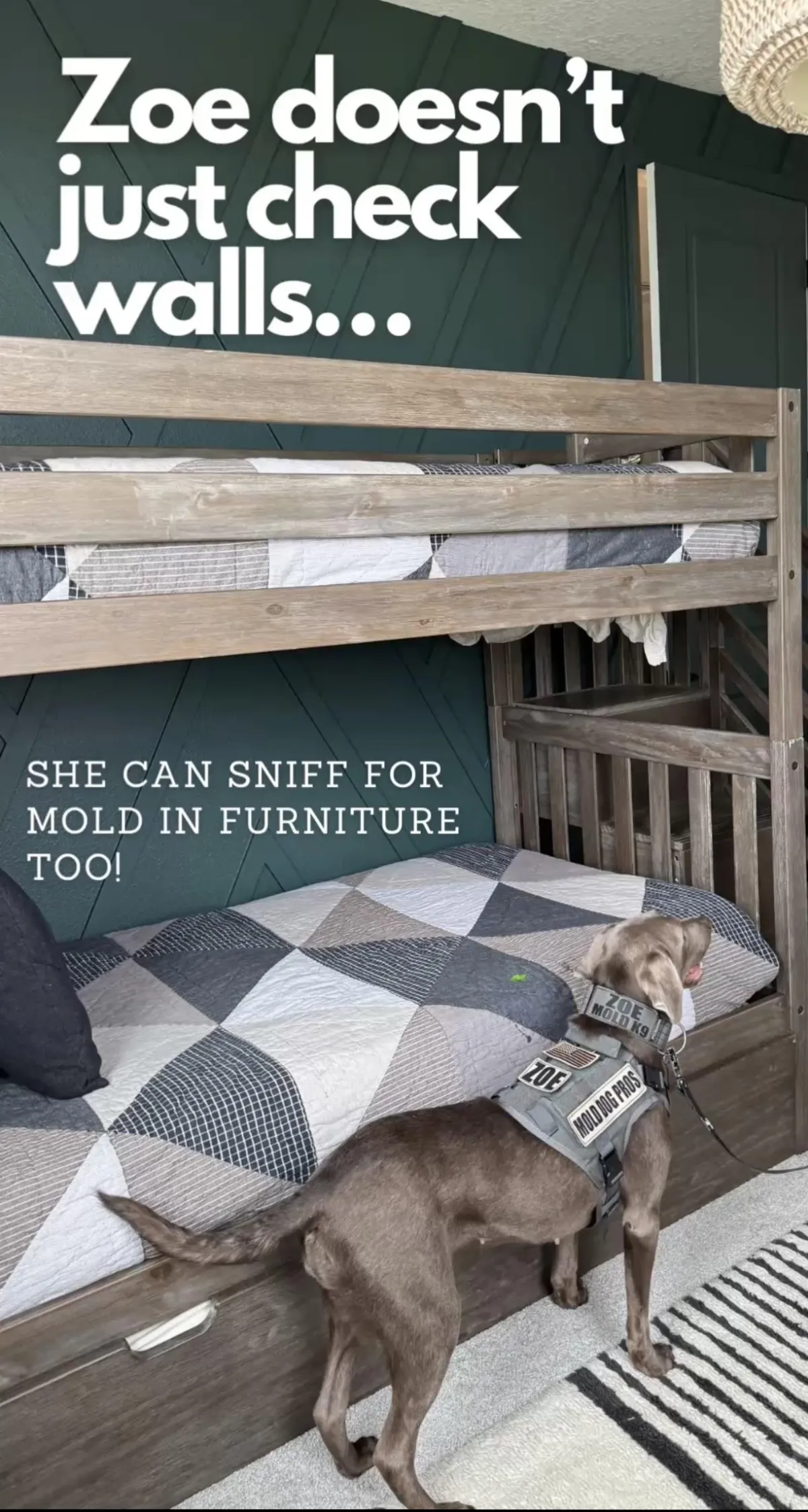
When the dog detects the scent, it performs a trained alert behavior—such as sitting or pawing—to signal the exact location.
Real Cases Where Mold Dogs Solved the Mystery
Stories of mold detection dogs uncovering hidden contamination are becoming more common.
In one case reported in national media, a family spent years searching for the cause of their child’s chronic health issues. Numerous home inspections and tests failed to find a problem.
When a trained mold detection dog inspected the home, the dog alerted to a wall near the child’s bed.
Once the wall was opened, investigators discovered a large mold colony hidden behind the vapor barrier—a problem that had gone undetected for years.
Situations like this highlight an important truth:
Mold can exist in places inspectors cannot easily access.
The Health Effects of Mold Exposure
Exposure to mold and water-damaged buildings can affect people differently depending on their sensitivity and immune system.
Common symptoms associated with mold exposure include:
Chronic fatigue
Brain fog
Headaches
Sinus congestion
Respiratory irritation
Skin rashes
Anxiety or mood changes
Sleep disturbances
Immune system dysfunction
Certain species of mold can produce mycotoxins, toxic compounds that may contribute to inflammatory reactions in sensitive individuals.
People with the following conditions may be particularly vulnerable:
Mold sensitivity
Asthma
Allergies
Chronic inflammatory conditions
Autoimmune disorders
Children and elderly individuals may also be more susceptible to environmental exposures.
Advantages of Using a Mold Detection Dog
Mold detection dogs offer several benefits compared to traditional inspections.
Precise Location Detection
Instead of guessing where mold may be hidden, the dog can identify the exact area of contamination.
This helps avoid unnecessary demolition.
Faster Inspections
A trained mold dog can inspect an entire home in minutes instead of hours.
Reduced Guesswork
Rather than relying on random sampling locations, inspectors can target testing where the dog alerts.
Early Detection
Dogs can detect mold odors before visible growth appears, allowing problems to be addressed early.
When You Should Consider a Mold Dog Inspection
A mold detection dog inspection may be helpful if:
You smell mold but cannot find the source
You’ve experienced water damage in the past
Your home had roof or plumbing leaks
Family members have unexplained health symptoms
Previous mold inspections were inconclusive
You are purchasing a home and want deeper inspection
Your home has high humidity or condensation issues
In many cases, early detection can prevent major structural damage and costly remediation later.
Mold Detection Dogs vs Air Testing
Many homeowners ask whether a mold dog inspection replaces air testing.
The truth is they serve different purposes.
Method
What It Detects
Mold Detection Dog
Hidden mold source
Air Sampling
Mold spores in air
ERMI Dust Testing
Historical mold contamination
Moisture Inspection
Current moisture problems
The most thorough investigations often combine several of these methods.
However, locating the source of mold growth is usually the most critical step in solving a mold problem.
How Accurate Are Mold Detection Dogs?
Studies and training organizations report detection accuracy rates of over 90% when properly trained and handled.
However, like any inspection method, success depends on:
Proper training of the dog
Experienced handling
Controlled inspection protocols
Confirmation through follow-up testing
Professional mold dog inspections are typically paired with environmental testing or visual confirmation before remediation begins.
The Future of Mold Detection
As awareness of indoor environmental quality grows, mold detection dogs are becoming an increasingly valuable tool for homeowners and inspectors.
They provide a non-destructive method of locating hidden mold that can save time, money, and unnecessary demolition.
For many families struggling with unexplained health issues or recurring mold problems, these dogs provide answers where traditional inspections fall short.
Protecting Your Home From Hidden Mold
If you want to reduce the risk of mold growth in your home:
Fix leaks immediately
Maintain indoor humidity below 50%
Ensure proper bathroom and kitchen ventilation
Inspect roofs and plumbing regularly
Address water damage quickly
Avoid trapping moisture behind walls or flooring
And if you suspect hidden mold, early detection can make all the difference.
Schedule your mold dog inspection today → MoldDogPros.com
